
Pump failure warning signs during heating season: what to watch for and how to respond before the system goes down.
A commercial hydronic pump rarely fails without warning. The warning signs are there before the failure, sometimes weeks before, producing symptoms that are easy to dismiss as normal system variation until the pump stops working and the heating system loses circulation. Knowing what those warning signs look like and responding to them before failure is the difference between a scheduled repair during a maintenance window and an emergency replacement during the coldest week of the year.
Bearing temperature and noise
Bearing failure is one of the most common pump failure modes in commercial hydronic applications and one of the most clearly telegraphed in advance. A bearing that is developing a problem produces heat and noise before it seizes.
Check bearing housing temperature during operation with an infrared thermometer and compare it against the temperature of adjacent bearings and against the manufacturer’s maximum operating temperature for the bearing type. A bearing running significantly hotter than its neighbors is telling you something. Elevated temperature can indicate inadequate lubrication, contaminated lubricant, or the early stages of bearing race failure. Any of these is a reason to schedule service, not to monitor and hope.
Listen to the pump during operation. A healthy bearing produces a smooth, consistent sound. Rumbling, grinding, or intermittent ticking indicates developing wear. A bearing that sounds worse at startup and improves as it warms is different from one that gets louder during operation, but both need attention. Do not normalize bearing noise. It is not a normal operating condition.
Mechanical seal progression
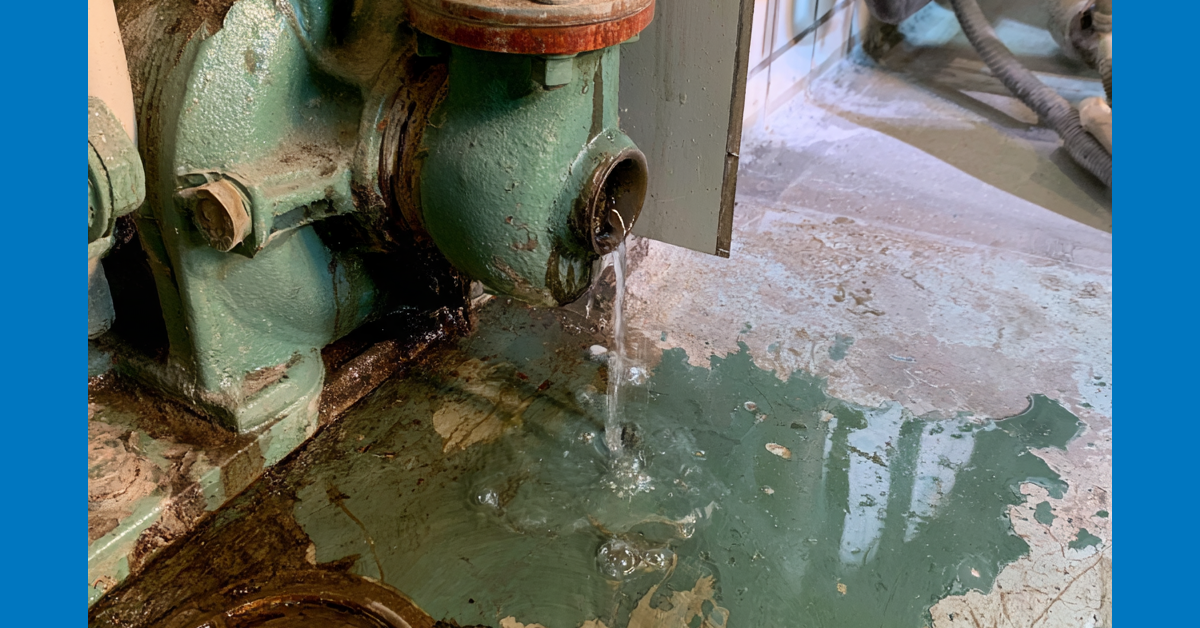
A mechanical seal that is beginning to fail produces a visible weep at the seal housing. The weep starts small, often just a stain or a mineral deposit ring below the seal housing, and progresses to a drip and eventually to a continuous leak if the seal is not replaced.
Inspect the area around the seal housing at each maintenance visit for staining, mineral deposits, and active weeping. A seal that is weeping slightly may continue to operate for weeks or months before it fails completely. A seal that was weeping last month and is now dripping has accelerated and needs to be replaced before it fails on a cold January night.
For pumps with packing rather than mechanical seals, check the gland for excessive leakage and for heat. Packing that is overtightened to control a leak runs hot and damages the shaft sleeve. A shaft sleeve that is scored by overtightened packing will not seal correctly with new packing and may require replacement along with the packing itself.
Vibration changes
Vibration is one of the most sensitive indicators of developing pump problems. A pump that has developed unusual vibration or whose vibration level has increased since the last measurement is showing signs of a problem that needs investigation.
Vibration can indicate impeller damage from cavitation or debris. It can indicate misalignment between the pump and the motor that has developed as the base has settled or as piping loads have shifted. It can indicate bearing wear that has allowed the shaft to move outside its design clearance. It can indicate worn wear rings that have allowed internal recirculation to develop.
A simple baseline vibration reading taken during pre-season commissioning gives you the reference point that makes subsequent readings meaningful. A pump whose vibration has doubled since commissioning has changed in a way that needs investigation. A pump with no baseline measurement can only be evaluated against a general sense of whether it seems worse than before.
Motor amperage trends
Motor amperage is a system-level indicator that captures the combined effect of hydraulic and mechanical problems in the pump. A motor drawing more amperage than its design current is working harder than it should, and that extra work is being caused by something. Increased system resistance from a partially closed valve or a loaded strainer increases amperage. Impeller wear or damage that has changed the pump’s hydraulic performance changes amperage. Bearing drag from inadequate lubrication increases amperage.
Review the variable speed drive display or panel ammeter at each maintenance visit and compare the reading against the design amperage at the current operating speed. A trend of increasing amperage at the same operating conditions is a signal that something in the system has changed. Finding out what changed before the motor trips on overload is significantly better than finding out during a heating season failure.
Variable speed drive fault history
Variable speed drive fault logs accumulate information about developing problems that nobody is reviewing in most commercial buildings. A drive that has been logging repeated faults without investigation has been communicating a problem for weeks or months before the pump fails.
Review the fault log on each variable speed drive during every maintenance visit. A fault that occurred once and has not recurred may have been a transient event. A fault that recurs regularly indicates a developing problem with the drive, the motor, or the system conditions the drive is responding to. Common recurring faults include overcurrent trips from bearing drag or impeller damage, overtemperature trips from a cooling system problem in the drive enclosure, and communication faults from a building automation system interface that is degrading.
For facilities where a pump failure during heating season would significantly affect occupied spaces or operations, the pre-season pump check described in our earlier article on pump pre-season preparation remains the most effective way to identify developing problems before heating season begins. For facilities that are now in heating season and are observing any of the warning signs described here, do not wait for the next scheduled maintenance visit.
For buildings where pump failure has affected the boiler plant operation or where a pump failure has contributed to a boiler being taken offline, the GP Energy Products team handles boiler emergency service across Pennsylvania, New Jersey, Delaware, and Maryland. Visit gpenergyproducts.com for more. For packaged pump systems where a failed pump needs a factory-documented replacement, FabPro Systems handles packaged pump skid fabrication nationally. Visit fabprosystems.com for more.
Merion Pump Company provides pump service and emergency response for commercial hydronic applications across Pennsylvania, New Jersey, Delaware, and Maryland. If any of the warning signs described here are present in your pump systems right now, reach out and we will get someone there before the failure happens on its own schedule.
References
1. Hydraulic Institute. Pump Installation, Operation, and Maintenance Standards. Covers bearing inspection, mechanical seal failure indicators, vibration assessment, and motor amperage monitoring for centrifugal pumps. pumps.org
2. ASHRAE. HVAC Systems and Equipment Handbook, Chapter on Pumps. Covers pump maintenance, failure mode identification, and corrective action guidance for commercial hydronic applications. ashrae.org
3. NEMA. Standards for Industrial Controls and Systems. Covers variable speed drive fault logging and motor protection requirements for commercial pump applications. nema.org
4. Vibration Institute. Machinery Vibration Analysis Standards. Covers vibration baseline measurement and trending for rotating equipment in commercial mechanical applications. vi-institute.org