
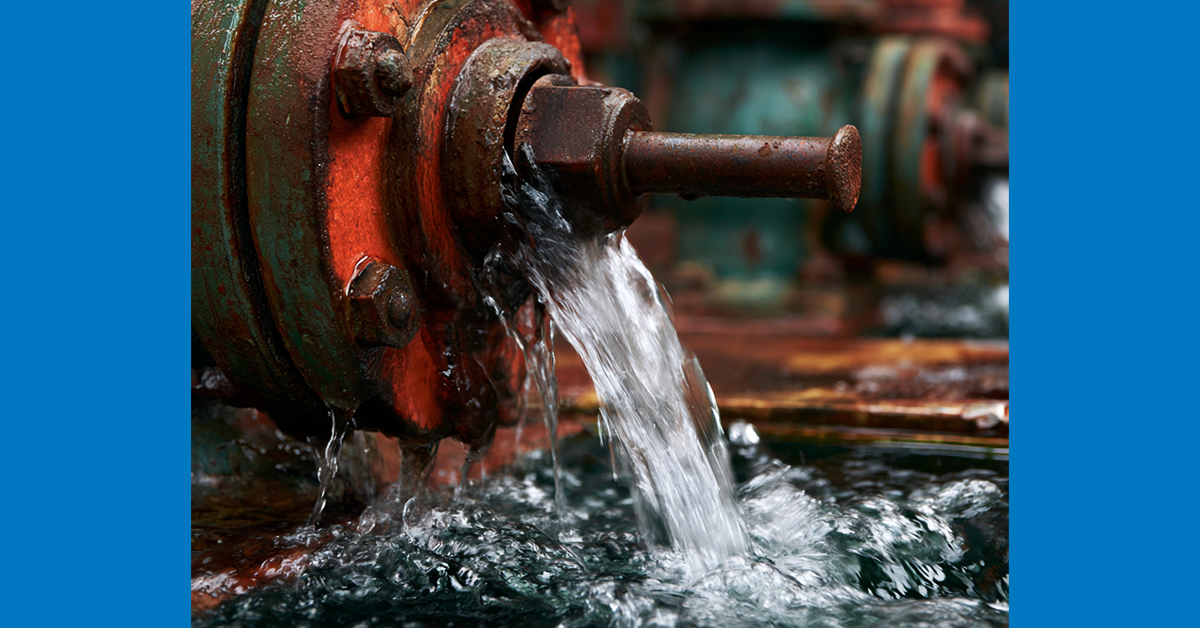
Pump repair and service: what commercial and industrial facilities need to know.
A pump that is underperforming costs money quietly. Reduced flow, increased energy consumption, vibration that accelerates bearing wear, mechanical seal leakage that starts as a slow drip and ends as a flooded mechanical room. Pump problems rarely announce themselves dramatically. They accumulate gradually, and by the time the symptoms are obvious the damage is already done.
Merion Pump Company provides pump service and repair for commercial and industrial facilities across Pennsylvania, Southern New Jersey, and Delaware. This article covers what pump service involves, how to recognize the signs that a pump needs attention before it fails, and what the service process looks like from the first call to the repaired system back online.
What commercial pump service covers
Pump service in commercial and industrial applications covers a range of work depending on what the pump is doing and what condition it is in.
Preventive maintenance is the work that keeps a pump performing correctly over its service life. Bearing lubrication or replacement, mechanical seal inspection and replacement, impeller wear inspection, coupling alignment verification, and operational testing are all part of a preventive maintenance program. A pump that receives regular preventive maintenance is less likely to fail unexpectedly and more likely to operate at its design efficiency across its full service life.
Diagnostic service is the work that happens when a pump is underperforming but has not failed outright. Flow rate below design, pressure that does not reach setpoint, unusual noise or vibration, elevated power consumption, and intermittent cavitation are all symptoms that warrant diagnostic service. Identifying the root cause before the pump fails completely is significantly less expensive than emergency repair after a hard failure.
Emergency repair is the work that happens when a pump has failed and a system is down. Emergency pump repair requires rapid diagnosis, parts availability, and the technical experience to work on a range of commercial pump equipment under time pressure.
Pump replacement is the work that happens when repair is not the right answer. When a pump has reached the end of its service life, when the cost of repair approaches or exceeds the cost of replacement, or when a more efficient replacement is available that will reduce operating costs, replacement is the better investment. Merion Pump helps facilities evaluate the repair versus replace decision with a clear analysis of the costs and benefits on both sides.
How pumps fail and what the warning signs look like
Most commercial pump failures follow a predictable pattern. Understanding the warning signs allows facility managers and plant engineers to address developing problems before they become hard failures.
Bearing failure is the most common cause of pump downtime. Bearings in commercial pump applications are subject to radial and axial loads that increase with wear, misalignment, and improper lubrication. The warning signs of developing bearing failure are elevated noise, typically a grinding or rumbling that is not present at installation, increased vibration, and elevated bearing temperature. A pump that is developing bearing problems and continues to run will eventually fail catastrophically, taking the mechanical seal and potentially the motor with it.
Mechanical seal failure produces leakage at the shaft. A small amount of weeping from a mechanical seal during initial operation is normal and does not indicate a problem. Progressive leakage that increases over time, or leakage that appears suddenly after the pump has been in service for a period, indicates seal wear or damage. An ignored mechanical seal leak will eventually produce a continuous leak rate that floods the mechanical room and, in hot water or steam applications, creates a safety hazard.
Impeller wear reduces the pump’s hydraulic performance over time. In systems with poor water treatment, abrasive particles in the fluid stream accelerate impeller erosion. A pump that is no longer meeting its design flow and pressure but shows no external signs of damage likely has a worn impeller. The only way to confirm this is to open the pump for inspection.
Cavitation damage is caused by vapor bubbles forming and collapsing inside the pump casing due to insufficient inlet pressure or suction conditions that fall below the pump’s minimum NPSH requirement. Cavitation produces a characteristic rattling noise and causes progressive damage to the impeller and casing that reduces performance and eventually causes structural failure. If a pump is cavitating, the system design or operating conditions need to be corrected, not just the pump.
Misalignment between the pump and the motor produces vibration that accelerates bearing and coupling wear. Misalignment can develop on a pump that was correctly aligned at installation due to pipe strain, thermal expansion, or settling of the base. A pump that is vibrating more than it did when new should have its alignment checked before the vibration causes bearing damage.
What helps the service team respond faster
The same principle that applies to boiler service applies to pump service. A service team that arrives knowing what they are working on responds faster than one that spends time identifying the equipment.
Useful information before the service team arrives: the pump manufacturer and model number from the nameplate. The motor horsepower and voltage. The system the pump serves and what it is connected to. The symptoms, when they started, and whether they developed gradually or appeared suddenly. Any recent work that has been done on the pump or the system it serves. Whether the pump has been repaired previously and if so what was done.
With that information the service team can arrive with the right parts, the right tools, and the right expectations for what they are likely to find.
Planned service versus emergency service
The economics of planned pump maintenance versus emergency repair are similar to those of boiler maintenance. A pump that receives regular preventive maintenance costs less to keep running over its service life than one that runs until it fails and then requires emergency repair. Emergency repair carries a premium for rapid response, parts expediting, and the disruption of an unplanned system outage.
The right time to schedule preventive maintenance is when the system can accommodate a brief outage without significant disruption. For pumps in hydronic heating systems, late spring and summer are the natural maintenance window. For pumps in cooling systems, fall and winter. For 24-hour process applications where the pump cannot be taken offline, a duplex configuration with a standby pump allows maintenance on one pump while the other keeps the system running.
For facilities that also manage commercial or industrial boiler systems, GP Energy Products handles boiler service and repair across Pennsylvania, New Jersey, Delaware, and Maryland. A coordinated service program that covers both the boiler plant and the pump systems reduces the number of service relationships a facility needs to manage and ensures that the full mechanical system is being maintained consistently. Visit gpenergyproducts.com for more on GP Energy’s boiler service capabilities.
References
1. Hydraulic Institute. Pump Installation, Operation, and Maintenance Standards. Covers pump maintenance requirements, bearing and seal service intervals, and alignment procedures. pumps.org
2. ASME B73.1. Specification for Horizontal End Suction Centrifugal Pumps. Covers design and maintenance standards for centrifugal pumps in commercial and industrial applications. asme.org
3. Hydraulic Institute. Pump Life Cycle Costs: A Guide to LCC Analysis. Covers the economics of pump repair versus replacement and preventive maintenance program development. pumps.org
4. ASHRAE. HVAC Systems and Equipment Handbook, Chapter on Pumps. Covers commercial pump applications, system design, and maintenance considerations. ashrae.org
All pump service work should be performed by qualified technicians in accordance with the pump manufacturer’s service documentation and applicable codes.