
Pump seals and bearings: what to check before heating season peaks.
Most pump failures do not happen without warning. A mechanical seal starts to weep. A bearing starts to run warm or noisy. The warning signs are usually there weeks before the pump stops, and a short inspection before peak load can catch them.
Mechanical seals
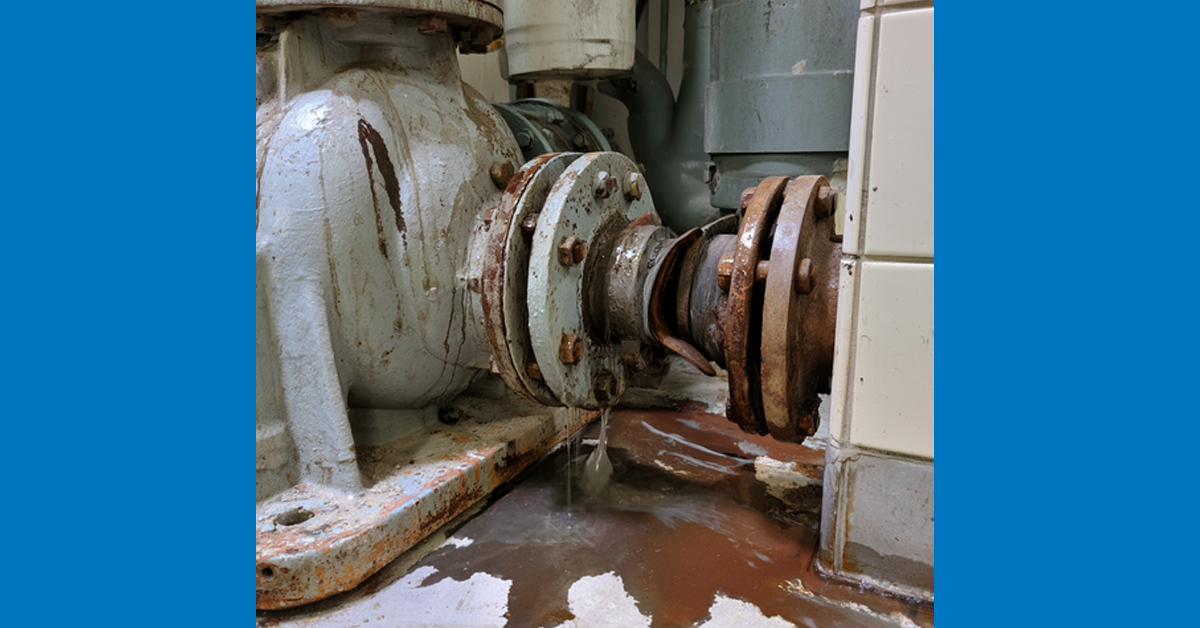
A mechanical seal keeps the fluid inside the pump where the shaft passes through the casing. A small amount of moisture at the seal face during startup is normal. A steady drip, a visible stream, or crystallized residue around the seal is not. Look for leakage at the seal area, staining or corrosion on the casing, and wet or damp spots below the pump.
Seals wear faster when the pump runs dry, runs far from its best operating point, or circulates fluid carrying debris. If a seal has failed more than once on the same pump, the cause is worth finding before the next one goes in.
Bearings
Bearings carry the shaft and the loads on it. Signs of trouble include a rise in bearing temperature, a growl or squeal, and increased vibration. A bearing that is running noticeably hotter than the other pumps on the same system deserves attention.
Check that lubrication is correct for the type of bearing. Some bearings are sealed and greased for life. Others need to be greased on a schedule, and both too little and too much grease can cause trouble.
Alignment and vibration
Misalignment between pump and motor is one of the most common causes of early seal and bearing wear. It also shows up as vibration. If a coupled pump has been moved, repaired, or had its piping changed, check the alignment. Piping that pulls on the pump casing can have the same effect, so look at whether pipe supports are carrying the pipe weight.
What to record
A short inspection is more useful if the results are written down. Note the date, the pump, the visible leakage, the temperatures, the noise, and the operating pressure and amperage. A change from one inspection to the next is more informative than any single reading.
When to call
If the seal is leaking, the bearings are noisy, or the pump has a history of repeat failures, it is better to address it before the cold weather. A pump that fails in January is a much bigger problem than one that is repaired in November.
For venting a replacement boiler, GP Energy Products covers that in today’s article. Visit gpenergyproducts.com for more. For coils in variable flow systems, HX Coils covers that in today’s article. Visit hxcoils.com for more. For a look at how a heat transfer skid gets built, FabPro Systems covers that in today’s article. Visit fabprosystems.com for more.
References
1. Hydraulic Institute. Pump FAQs: typical causes of mechanical seal failure in rotodynamic pumps and the possible leakage paths. Pumps & Systems, May 2012. pumpsandsystems.com/hydraulic-institute-pump-faqs-may-2012
2. Pumps & Systems. Common Pump Failure Factors: alignment, piping strain, lubrication, vibration, and bearing temperature. pumpsandsystems.com/common-pump-failure-factors
3. Pump manufacturer installation, operation, and maintenance manual for the specific pump.