
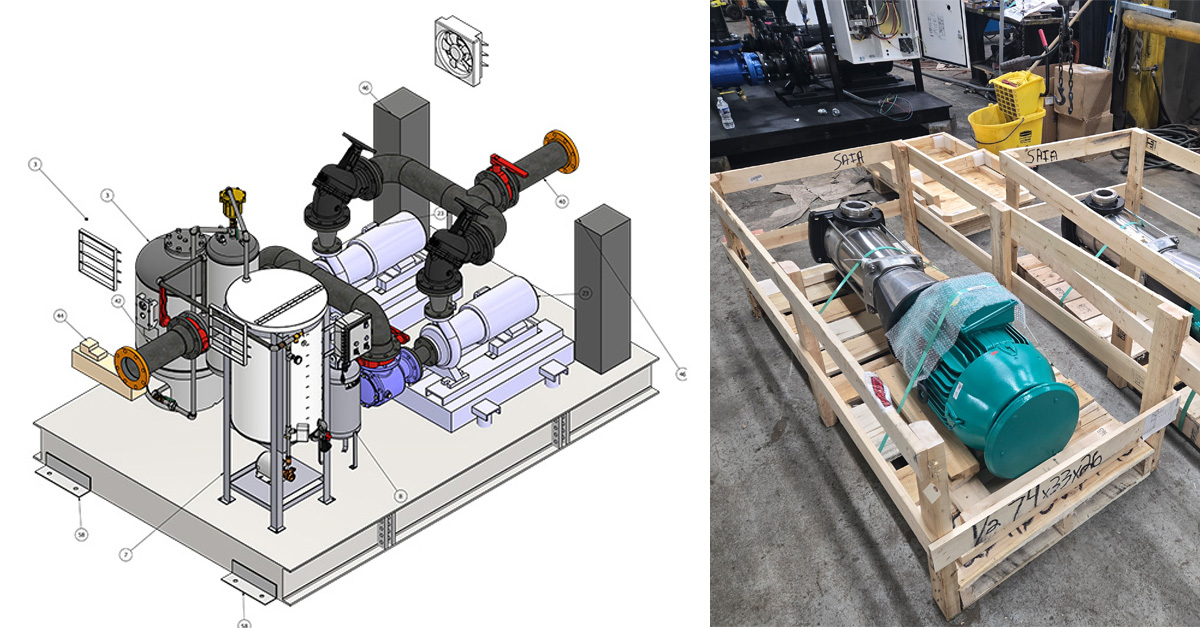
A pump is part of a system. We treat it that way.
The right pump for a hydronic system, a booster application, or a heat exchanger circuit is not just about the pump spec. It is about what the pump is connected to and what the system needs to do. That distinction sounds obvious when it is written out. In practice it is not how the majority of pump selections get made, and the gap between how a pump performs on paper and how it performs in the system it was installed into is often where the problems live.
Merion Pump Company represents manufacturers across the full range of commercial pumping applications. Wilo for high-efficiency hydronic circulators and package booster systems. Tower Tech for cooling tower applications where the condenser water pump selection is part of the tower performance equation. Polaris PHE for plate heat exchanger applications where the pump on the primary and secondary sides of the exchanger needs to be understood together. The common thread is not the product. It is the approach: understand the system before you specify the component.
What the system context changes about pump selection
In a variable flow hydronic system, the pump selection cannot be made without understanding the control strategy. A pump sized for design flow in a system with two-way control valves and a variable speed drive will perform very differently at part load than the pump curve suggests it will at full load. The minimum flow condition, the pressure differential setpoint, and the control logic all affect how the pump actually operates across the full range of system conditions, not just at the design point the curve was drawn for.
In a booster application, the pump selection cannot be made without understanding the inlet pressure at minimum supply conditions, the peak demand profile of the building, and whether the application requires a duty and standby configuration or a lead-lag arrangement. A pump selected to the right pressure and flow at design conditions but specified without that context will underperform during peak demand or fail to protect the building during a pump service event.
In a heat exchanger application, the pump on each side of the exchanger affects the performance of the exchanger itself. Flow rate determines the heat transfer coefficient. Pressure drop affects the system energy budget. A heat exchanger and pump specified independently, without the interface between them accounted for, will not perform the way either component’s spec sheet predicts.
“The right pump is the one that performs correctly in the system it is going into, across the full range of operating conditions, not just at the design point on the selection curve.”
How Merion Pump approaches a specification
When a contractor or engineer brings a pump application to Merion, the first questions are about the system. What is the application? What are the minimum and maximum operating conditions? What is the control strategy? What is connected to the pump on both sides? Those questions take a few minutes and they change the specification in ways that matter.
Merion Pump Company is part of GP Energy Products Group, which means the pump conversation does not have to stop at the pump. If the application involves a boiler, a coil, or a custom fabricated system, the team that handles those components is the same team. The system picture is available from a single conversation.
References
1. Hydraulic Institute. Pump System Optimization Guide. pumps.org
2. ASHRAE. HVAC Systems and Equipment Handbook, Chapter on Pumps and Hydronic Systems. ashrae.org
3. Wilo USA. Variable Speed Pump Technology and Application Guide. wilo.com/us