
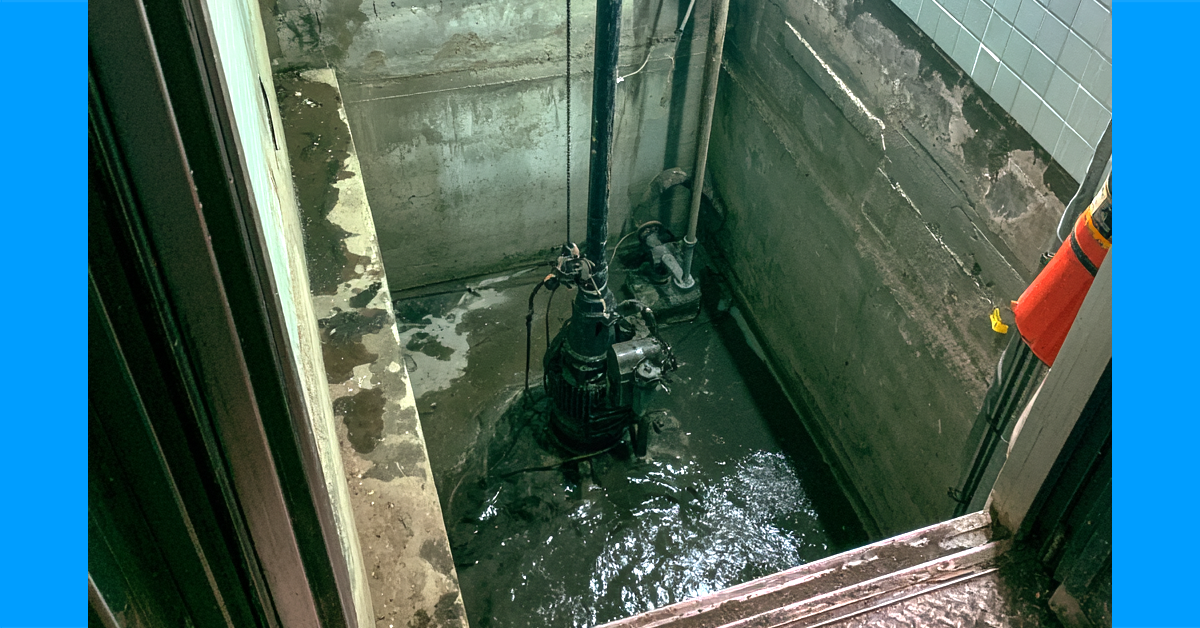
Elevator sump pumps: what building owners and facility managers need to know about selecting and maintaining them.
Elevator pit sump pumps are among the most overlooked components in commercial building mechanical systems. They do not move chilled water or heating hot water. They do not appear on the mechanical engineer’s pump schedule. They sit at the bottom of elevator pits and run infrequently enough that nobody thinks about them until the elevator pit floods, the elevator goes out of service, and the building owner is looking at a repair bill that dwarfs what a properly selected and maintained sump pump would have cost over its entire service life.
ASME A17.1, the Safety Code for Elevators and Escalators, requires that elevator pits be kept dry and that a means of removing water be provided. The sump pump is that means. Getting it right matters for code compliance, for elevator availability, and for the liability exposure that comes with a flooded elevator pit in a building that is occupied.
Why elevator pit sump pumps fail
The most common reason elevator pit sump pumps fail is that they were undersized for the actual water infiltration rate at the site. The water that enters an elevator pit comes from groundwater infiltration through the pit walls and floor, from condensation on the pit structure and elevator equipment, from roof or surface drainage that finds its way into the pit, and in some buildings from HVAC condensate that drains to the pit. Each of these sources has a different flow rate and a different seasonal pattern.
A sump pump sized for average infiltration rather than peak infiltration will be overwhelmed during heavy rain events or periods of high groundwater. By the time the flood is discovered, the water level has reached elevator equipment, the elevator has been taken out of service by the safety circuit, and the damage has been done.
The second most common failure mode is float switch malfunction. The float switch activates the pump when the water level reaches a defined height and deactivates it when the level drops. A float switch that is stuck in the off position leaves the pump idle while the pit fills. A float switch that is stuck in the on position runs the pump continuously until the motor burns out. Float switches in elevator pits are exposed to the dust, debris, and occasional flooding that characterize pit environments, and they are more failure-prone than float switches in cleaner applications.
The third failure mode is simply age and deferred maintenance. A sump pump that has been running without inspection or service for years accumulates wear on the impeller, the seal, and the motor bearings without producing any visible indication of degradation until it stops working.
Sizing considerations
Sump pump sizing for elevator pits requires an estimate of the peak water infiltration rate and a selection that keeps the water level below the critical elevation for elevator equipment under that peak rate. The critical elevation is typically defined by the elevator manufacturer and the pit design, and it represents the water level above which elevator equipment is at risk.
The pump flow rate needs to exceed the peak infiltration rate with enough margin that the pump can lower the water level after a peak event rather than just keeping pace with incoming water. A pump that exactly matches the peak infiltration rate will maintain a constant water level during a peak event but will never drain the pit after the event ends.
Pump selection also needs to account for the total dynamic head against which the pump must discharge. The discharge head includes the static lift from the pit floor to the discharge point, the friction losses in the discharge piping, and any pressure in the discharge system if the pump discharges to a pressurized sanitary line. An undersized discharge pipe or a discharge point that is significantly above the pit floor level can reduce the actual flow rate of a correctly sized pump below what the application requires.
Float switch configuration
A properly configured float switch system for an elevator pit sump application includes a primary float switch that activates the pump at the normal operating water level, a secondary high-water alarm float switch set at a level above the primary that triggers an alarm when the water level rises above normal pump-on level, and in critical applications a second pump on an alternating or backup circuit.
The high-water alarm is not optional in a commercial building with occupied elevators. The alarm needs to reach someone who can respond. An alarm that trips silently in a building where nobody monitors the alarm panel is functionally equivalent to no alarm. In buildings with a building automation system, the high-water alarm should be connected to the BAS and routed to the appropriate notification path.
Alternating float switch configurations cycle the lead and lag pumps between cycles so that both pumps accumulate run time evenly. This is preferable to a fixed lead-lag arrangement where one pump runs all the time and the second pump sits idle long enough that it seizes when it is finally called upon.
Code compliance under ASME A17.1
ASME A17.1 requires that elevator pits be equipped with a means of removing water and that the pit be kept free of water accumulation. The standard does not specify the pump type or the precise water level at which the pump must activate, but it does require that the system be capable of keeping the pit dry under normal conditions and that the pit be accessible for inspection and maintenance.
State and local elevator codes may have additional requirements beyond ASME A17.1 that apply in Pennsylvania, New Jersey, Delaware, and Maryland. The authority having jurisdiction for elevator safety in each state has enforcement authority over the elevator pit condition and the sump pump system. A pit that floods during an inspection can result in the elevator being taken out of service until the condition is corrected.
For buildings where the elevator pit sump pump discharges to the sanitary system, local plumbing code requirements for the discharge connection, including backflow prevention and air gap requirements, apply to the sump pump installation in addition to the elevator code requirements.
Maintenance
An elevator pit sump pump that is not inspected regularly provides no reliable indication of its condition until it fails. A basic maintenance program includes annual inspection of the pump, motor, and float switch, testing of the pump by manually activating it and confirming that it moves water at the expected rate, testing of the high-water alarm by raising the float switch to the alarm position and confirming that the alarm activates, and inspection of the discharge piping for blockage or leakage.
For buildings where elevator availability is critical, a more frequent inspection interval is appropriate. A flooded elevator pit in a hospital, a hotel, or a high-rise office building has consequences that significantly exceed the cost of a quarterly pump inspection.
Merion Pump Company carries sump pump and float switch products for elevator pit applications across Pennsylvania, New Jersey, Delaware, and Maryland. For buildings where the elevator pit sump pump is part of a broader building mechanical system upgrade, the FabPro Systems team designs packaged sump pump systems with integrated controls and monitoring. Visit fabprosystems.com for more.
References
1. ASME A17.1. Safety Code for Elevators and Escalators. Governs elevator pit conditions including water removal requirements for commercial elevator installations. asme.org
2. Hydraulic Institute. Sump Pump Application and Selection Guide. Covers sump pump sizing, float switch configuration, and maintenance requirements for commercial applications. pumps.org
3. International Plumbing Code. Chapter on Special Plumbing Fixtures. Covers discharge connection requirements for sump pumps in commercial buildings. iccsafe.org
4. National Elevator Industry Inc. Elevator Maintenance and Inspection Standards. Covers elevator pit condition requirements and inspection procedures. neii.org