
Across the Mid-Atlantic region, facility owners and project teams are taking a closer look at how water is used and where costs can be reduced. In Pennsylvania, New Jersey, and Delaware, rising utility costs, sustainability requirements, and stormwater management regulations are driving increased interest in rainwater harvesting and non-potable water reuse systems.
Rather than allowing rainwater to become runoff, many projects are now capturing and reusing it to offset potable water demand and deliver long-term operational savings.
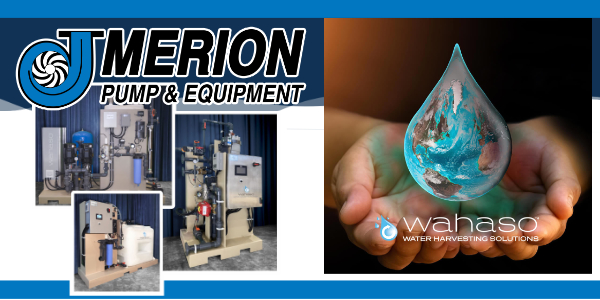
Merion Pump and Equipment is partnered with Wahaso to provide prefabricated rainwater harvesting systems for commercial and institutional projects throughout the Mid-Atlantic region.
Why Rainwater Harvesting Is Gaining Momentum in PA, NJ, and Delaware
Projects across Pennsylvania, New Jersey, and Delaware are increasingly focused on reducing potable water usage while meeting sustainability and environmental goals. Common drivers include:
• Rising municipal water and sewer costs
• Local stormwater management requirements
• Sustainability targets and ESG initiatives
• High non-potable water demand in commercial and institutional facilities
Rainwater harvesting systems allow facilities to reuse collected water for applications such as irrigation, toilet flushing, cooling tower makeup, and other non-potable uses, directly reducing reliance on municipal water supplies.
How Wahaso’s Prefabricated Systems Support Water Reuse
Wahaso’s rainwater harvesting systems are designed as factory-assembled, pre-engineered solutions that simplify deployment while delivering consistent performance.
Key characteristics include:
• Prefabricated systems that arrive pre-wired and pre-plumbed
• Integrated controls and components for efficient operation
• Minimal maintenance requirements compared to field-built alternatives
• Clear system layouts that support long-term serviceability
By using a prefabricated approach, much of the complexity is addressed before the system reaches the jobsite, allowing installation teams to focus on connection and commissioning rather than assembly.
Reducing Utility Costs Through Non-Potable Water Reuse
One of the primary benefits of rainwater harvesting systems is their impact on operating costs.
By reusing rainwater for non-potable demands, facilities can significantly reduce potable water consumption over time. This not only lowers utility bills, but also helps stabilize long-term operating expenses in regions where water and sewer rates continue to rise.
For facilities with consistent non-potable water demand, the ability to turn captured rainwater into a usable resource creates measurable, ongoing value.
Where Rainwater Harvesting Systems Make Sense
Rainwater harvesting and water reuse systems are particularly well suited for:
• Commercial and institutional buildings with high non-potable water demand
• New construction and major retrofit projects
• Facilities with sustainability or water reduction goals
• Sites subject to stormwater management requirements
• Projects seeking long-term operational savings
Hospitals, universities, commercial campuses, and municipal facilities throughout PA, NJ, and Delaware are increasingly incorporating rainwater harvesting into early project planning.
Working with Merion Pump and Equipment in the Mid-Atlantic
As a Wahaso partner, Merion Pump and Equipment works with engineers, contractors, and facility teams across the Mid-Atlantic region to evaluate rainwater harvesting and non-potable water reuse solutions.
Our role is to help determine whether a rainwater harvesting system aligns with project goals, site conditions, and operational needs, and to guide teams through available system options.
If you are planning a project in Pennsylvania, New Jersey, or Delaware and want to explore rainwater harvesting solutions, we are happy to start the conversation.
Get in touch with us to learn more:
https://4u5a3.share.hsforms.com/2pdzrKLjfQh-4gyQL5TbZ1w